
The poinsettia (/p??n's?ti?/p or /??n's?t?/) (Euphorbia pulcherrima) is a commercially important place varieties of the diverse spurge family. The species is indigenous to Mexico. It is particularly popular because of its red and inexperienced foliage and is also trusted in Christmas floral exhibits. It derives its common English name from Joel Roberts Poinsett,[3] the first United States Minister to Mexico,[4] who introduced the plant to the united states in 1825.
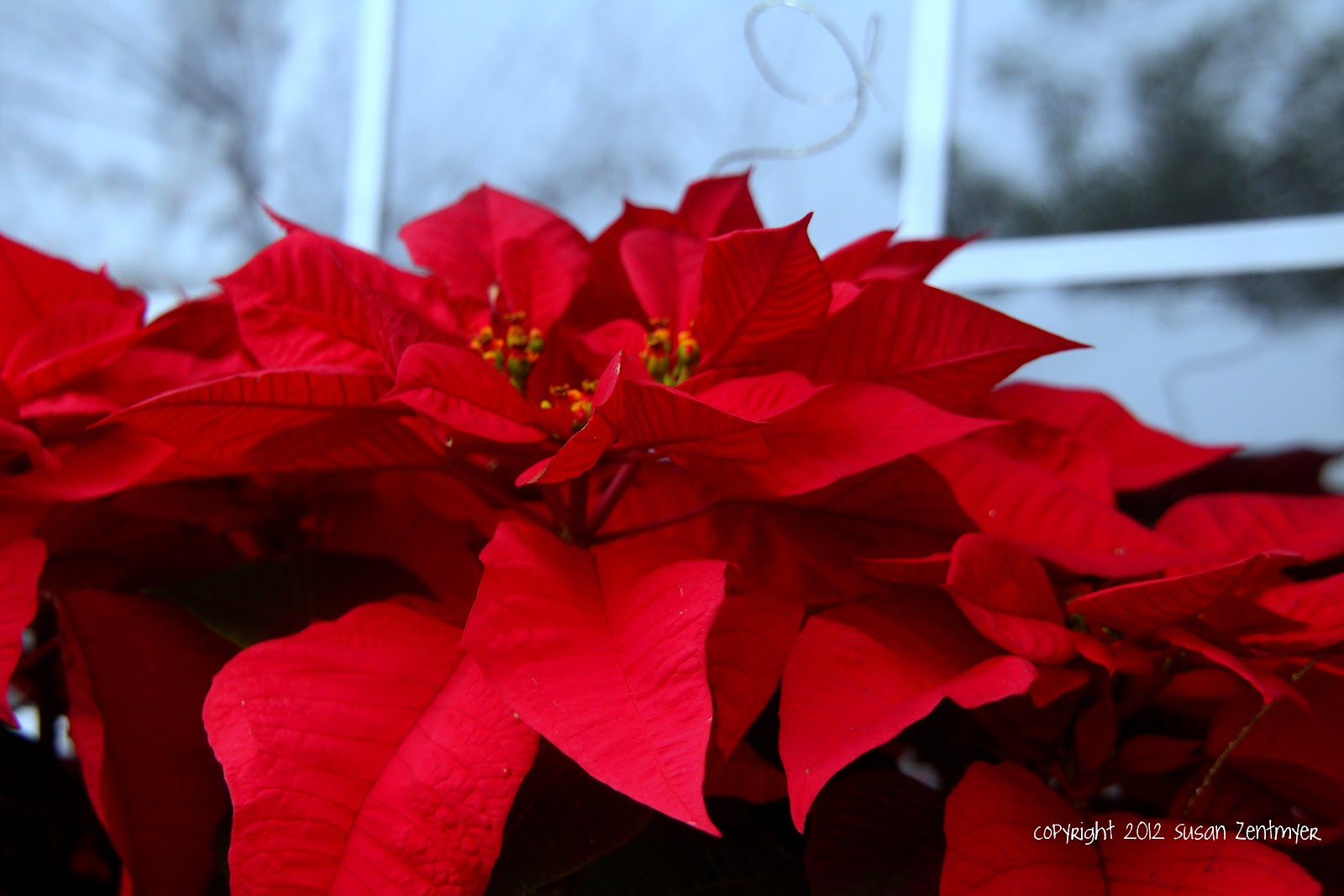
Euphorbia pulcherrima is a shrub or small tree, reaching a elevation of 0 typically.6-4 metres (2 ft 0 in-13 ft 1 in). The herb bears dark inexperienced dentate leaves that solution 7-16 centimetres (2.8-6.3 in) in length. The shaded bracts--which are most often flaming red but can be orange, pale green, cream, pink, white, or marbled--are often recognised incorrectly as rose petals because of their groupings and colors, but are actually leaves.[citation needed] The colors of the bracts are created through photoperiodism, and therefore they might need darkness (12 hours at a time for at least five days in a row) to change color. At the same time, the vegetation require considerable light throughout the day for the brightest color. The flowers of the poinsettia are unassuming , nor attract pollinators. They are simply grouped within small yellowish structures found in the center of every leaf number, and are called cyathia. The poinsettia is local to Mexico. It really is found in the outdoors in deciduous exotic forests at modest elevations from southern Sinaloa down the whole Pacific coast of Mexico to Chiapas and Guatemala. Additionally it is found in the inside in the hot, dry forests of Guerrero seasonally, Oaxaca, and Chiapas. Information of E. pulcherrima growing in the open in Costa and Nicaragua Rica have yet to be established by botanists. There are over 100 cultivated types of poinsettia.
The plant was utilized by the Aztecs to produce red dye and as an antipyretic medication. In Nahuatl, the language of the Aztecs, the plant is called Cuitlaxochitl, meaning "flower that grows in residues or soil" Today it is known in Mexico and Guatemala as Flor de Noche Buena, meaning Christmas Eve Flower. In Spain it is known as Flor de Pascua or Pascua, indicating Easter flower. In Chile and Peru, the vegetable became known as Crown of the Andes. In Turkey, it is called Atat?rk's bloom because Atat?rk, the founder of the Republic, liked this flower and made a substantial contribution to its cultivation in Turkey.[citation needed] In Hungarian, it is named Santa Claus' Rose, and it's widely used as a Christmas decoration.
The plant's connection with Christmas started in 16th-century Mexico, where star tells of a woman, called Pepita or Maria commonly, who was simply too poor to give a present for the special event of Jesus' birthday and was inspired by an angel to gather weeds from the roadside and place them before the church altar. Crimson blossoms sprouted from the weeds and became beautiful poinsettias. From the 17th century, Franciscan friars in Mexico included the plants in their Holiday festivities. The star-shaped leaf design is thought to symbolize the Celebrity of Bethlehem, and the red color represents the blood sacrifice through the crucifixion of Jesus. Poinsettias are popular Christmas decorations in homes, churches, offices, and across North America elsewhere. They are available in good sized quantities from grocery, drug, and hardware stores. In america, 12 is National Poinsettia Day dec.
Poinsettia Greenhouse, Encinitas CA California Pinterest

Poinsettia, Jingle bells and Le39;veon bell on Pinterest

1000+ images about POINSETTIAS on Pinterest Poinsettia, Christmas

Leucadia Blog: It39;s Poinsettia Time

Poinsettias from the Paul Ecke Ranch in Encinitas, California

The poinsettia (/p??n's?ti?/ or /p??n's?t?/) (Euphorbia pulcherrima) is a commercially important vegetable varieties of the diverse spurge family. The species is indigenous to Mexico. It really is especially popular for its green and red foliage and is also trusted in Holiday floral exhibits. It derives its common English name from Joel Roberts Poinsett,[3] the first USA Minister to Mexico,[4] who introduced the plant to the united states in 1825.
Euphorbia pulcherrima is a shrub or small tree, typically attaining a elevation of 0.6-4 metres (2 ft 0 in-13 ft 1 in). The plant bears dark green dentate leaves that strategy 7-16 centimetres (2.8-6.3 in) in length. The coloured bracts--which are most often flaming red but can be orange, pale green, cream, red, white, or marbled--are mistaken for bloom petals for their groupings and colors often, but are actually leaves.[citation needed] The colors of the bracts are manufactured through photoperiodism, meaning that they might need darkness (12 hours at a time for at least five days in a row) to change color. At exactly the same time, the vegetation require considerable light during the day for the brightest color. The flowers of the poinsettia are unassuming and don't attract pollinators. They may be grouped within small yellow structures within the center of each leaf number, and are called cyathia. The poinsettia is indigenous to Mexico. It is within the outrageous in deciduous exotic forests at average elevations from southern Sinaloa down the complete Pacific coast of Mexico to Chiapas and Guatemala. It is found in the inside in the hot also, seasonally dried out forests of Guerrero, Oaxaca, and Chiapas. Records of E. pulcherrima growing in the open in Costa and Nicaragua Rica have yet to be proved by botanists. You will discover over 100 cultivated varieties of poinsettia.
The Aztecs used the plant to produce red dye and as an antipyretic medication. In Nahuatl, the language of the Aztecs, the plant is called Cuitlaxochitl, meaning "flower that grows in residues or soil" Today it is well known in Mexico and Guatemala as Flor de Noche Buena, meaning Christmas Eve Flower. In Spain it is known as Flor de Pascua or Pascua, indicating Easter flower. In Chile and Peru, the seed became known as Crown of the Andes. In Turkey, it is named Atat?rk's blossom because Atat?rk, the creator of the Republic, liked this bloom and made a substantial contribution to its cultivation in Turkey.[citation needed] In Hungarian, it is called Santa Claus' Blossom, and it's trusted as a Xmas decoration.
The plant's connection with Christmas started in 16th-century Mexico, where star tells of a girl, commonly called Pepita or Maria, who was too poor to provide a present for the party of Jesus' birthday and was inspired by an angel to assemble weeds from the roadside and place them in front of the church altar. Crimson blossoms sprouted from the weeds and became beautiful poinsettias. From the 17th century, Franciscan friars in Mexico included the plant life in their Holiday get-togethers. The star-shaped leaf style is said to symbolize the Star of Bethlehem, and the red color represents the bloodstream sacrifice through the crucifixion of Jesus. Poinsettias are popular Holiday accessories in homes, churches, offices, and across THE UNITED STATES elsewhere. They can be purchased in large numbers from grocery, drug, and hardware stores. In the United States, December 12 is Country wide Poinsettia Day.
Real Orange Poinsettia Flowers Pinterest

Bright amp; Beautiful Ideas for Decorating with Poinsettias: Red Ecke Mix

New Poinsettia Colors COLORING PICTURE POINSETTIA « ONLINE COLORING

Ecke Ranch quot;Hardest Decision I Ever Made” Encinitas, CA Patch

Poinsettias from the Paul Ecke Ranch in Encinitas, California

The poinsettia (/p??n's?ti?/ or /p??n's?t?/) (Euphorbia pulcherrima) is a commercially important plant types of the diverse spurge family. The species is indigenous to Mexico. It is specifically popular because of its red and green foliage which is trusted in Xmas floral displays. It derives its common English name from Joel Roberts Poinsett,[3] the first USA Minister to Mexico,[4] who introduced the plant to the united states in 1825.
Euphorbia pulcherrima is a shrub or small tree, reaching a elevation of 0 typically.6-4 metres (2 ft 0 in-13 ft 1 in). The seed bears dark inexperienced dentate leaves that strategy 7-16 centimetres (2.8-6.3 in) in length. The coloured bracts--which are most often flaming red but can be orange, pale green, cream, red, white, or marbled--are recognised incorrectly as blossom petals because of their groupings and colors often, but are leaves actually.[citation needed] The colors of the bracts are manufactured through photoperiodism, meaning that they might need darkness (12 hours at the same time for at least five days in a row) to improve color. At the same time, the vegetation require abundant light through the full day for the brightest color. The flowers of the poinsettia are unassuming and don't attract pollinators. They are really grouped within small yellowish structures within the center of every leaf bunch, and are called cyathia. The poinsettia is native to Mexico. It is found in the untamed in deciduous exotic forests at modest elevations from southern Sinaloa down the entire Pacific coast of Mexico to Chiapas and Guatemala. It really is found in the interior in the hot also, seasonally dry forests of Guerrero, Oaxaca, and Chiapas. Accounts of E. pulcherrima growing in the open in Costa and Nicaragua Rica have yet to be established by botanists. A couple of over 100 cultivated types of poinsettia.
The Aztecs used the plant to produce red dye and as an antipyretic medication. In Nahuatl, the language of the Aztecs, the plant is called Cuitlaxochitl, meaning "flower that grows in residues or soil" Today it is well known in Mexico and Guatemala as Flor de Noche Buena, meaning Christmas Eve Flower. In Spain it is recognized as Flor de Pascua or Pascua, signifying Easter flower. In Chile and Peru, the plant became known as Crown of the Andes. In Turkey, it is named Atat?rk's bloom because Atat?rk, the founder of the Republic, liked this blossom and made a significant contribution to its cultivation in Turkey.[citation needed] In Hungarian, it is named Santa Claus' Flower, and it's widely used as a Xmas decoration.
The plant's relationship with Christmas commenced in 16th-century Mexico, where story tells of a woman, called Pepita or Maria commonly, who was too poor to provide a present for the celebration of Jesus' birthday and was influenced by an angel to gather weeds from the roadside and place them in front of the cathedral altar. Crimson blossoms sprouted from the weeds and became beautiful poinsettias. From the 17th century, Franciscan friars in Mexico included the plant life in their Holiday activities. The star-shaped leaf style is said to symbolize the Legend of Bethlehem, and the red colorization represents the blood sacrifice through the crucifixion of Jesus. Poinsettias are popular Holiday decor in homes, churches, offices, and across THE UNITED STATES elsewhere. They can be purchased in large numbers from grocery, drug, and hardware stores. In the United States, Dec 12 is Country wide Poinsettia Day.
in Encinitas, California, 80 percent of all flowering poinsettias

Coreopsis verticillata 39;Limerock Ruby39; PP15455

encinitas california encinitas ca is a town with a great deal to offer

Encinitasguide39;s Blog

Poinsettias from the Paul Ecke Ranch in Encinitas, California

The poinsettia (/p??n's?ti?/p or /??n's?t?/) (Euphorbia pulcherrima) is a commercially important seed varieties of the diverse spurge family. The species is indigenous to Mexico. It is particularly well known because of its inexperienced and red foliage and it is widely used in Xmas floral shows. It derives its common English name from Joel Roberts Poinsett,[3] the first United States Minister to Mexico,[4] who introduced the plant to the US in 1825.
Euphorbia pulcherrima is a shrub or small tree, attaining a elevation of 0 typically.6-4 metres (2 ft 0 in-13 ft 1 in). The seed bears dark renewable dentate leaves that solution 7-16 centimetres (2.8-6.3 in) in length. The colored bracts--which are most flaming red but can be orange often, pale green, cream, pink, white, or marbled--are often mistaken for blossom petals for their groupings and colors, but are actually leaves.[citation needed] The colors of the bracts are manufactured through photoperiodism, meaning that they require darkness (12 hours at the same time for at least five days in a row) to change color. At the same time, the vegetation require numerous light during the full day for the brightest color. The flowers of the poinsettia are unassuming and don't attract pollinators. They are grouped within small yellow structures found in the center of every leaf bunch, and are called cyathia. The poinsettia is native to Mexico. It really is within the outdoors in deciduous exotic forests at average elevations from southern Sinaloa down the entire Pacific coast of Mexico to Chiapas and Guatemala. It is found in the inside in the hot also, seasonally dry forests of Guerrero, Oaxaca, and Chiapas. Accounts of E. pulcherrima growing in the open in Nicaragua and Costa Rica have yet to be validated by botanists. You can find over 100 cultivated varieties of poinsettia.
The Aztecs used the plant to produce red dye and as an antipyretic medication. In Nahuatl, the language of the Aztecs, the plant is named Cuitlaxochitl, meaning "flower that grows in residues or soil" Today it is known in Mexico and Guatemala as Flor de Noche Buena, meaning Christmas Eve Flower. In Spain it is known as Flor de Pascua or Pascua, signifying Easter flower. In Peru and Chile, the plant became known as Crown of the Andes. In Turkey, it is called Atat?rk's rose because Atat?rk, the creator of the Republic, liked this blossom and made a substantial contribution to its cultivation in Turkey.[citation needed] In Hungarian, it is called Santa Claus' Blossom, and it's widely used as a Holiday decoration.
The plant's connection with Christmas started out in 16th-century Mexico, where story tells of a girl, commonly called Pepita or Maria, who was too poor to give a present for the celebration of Jesus' birthday and was encouraged by an angel to assemble weeds from the roadside and place them in front of the chapel altar. Crimson blossoms sprouted from the weeds and became beautiful poinsettias. From the 17th century, Franciscan friars in Mexico included the crops in their Christmas activities. The star-shaped leaf design is thought to symbolize the Superstar of Bethlehem, and the red color represents the blood vessels sacrifice through the crucifixion of Jesus. Poinsettias are popular Christmas designs in homes, churches, offices, and in other places across North America. They are available in large numbers from grocery, drug, and hardware stores. In america, Dec 12 is Country wide Poinsettia Day.
Local growers keep Encinitas poinsettia history alive Seaside

Euphorbia hybrid ‘Love Me Pink’ No its NOT a pink poinsettia

Encinitas, CA

Encinitas Dining and Shopping Extravaganza in Downtown Encinitas CA

Poinsettias from the Paul Ecke Ranch in Encinitas, California
The poinsettia (/p??n's?ti?/ or /p??n's?t?/) (Euphorbia pulcherrima) is a commercially important vegetable types of the diverse spurge family. The kinds is indigenous to Mexico. It really is particularly well known for its green and red foliage and is trusted in Xmas floral displays. It derives its common English name from Joel Roberts Poinsett,[3] the first USA Minister to Mexico,[4] who introduced the plant to the united states in 1825.
Euphorbia pulcherrima is a shrub or small tree, typically achieving a elevation of 0.6-4 metres (2 ft 0 in-13 ft 1 in). The herb bears dark green dentate leaves that solution 7-16 centimetres (2.8-6.3 in) in length. The coloured bracts--which are most flaming red but can be orange often, pale green, cream, green, white, or marbled--are mistaken for rose petals because of their groupings and colors often, but are leaves actually.[citation needed] The colors of the bracts are manufactured through photoperiodism, and therefore they require darkness (12 hours at a time for at least five days in a row) to improve color. At exactly the same time, the crops require considerable light during the full day for the brightest color. The flowers of the poinsettia are unassuming and don't attract pollinators. These are grouped within small yellow structures found in the center of each leaf bunch, and are called cyathia. The poinsettia is indigenous to Mexico. It really is found in the untamed in deciduous exotic forests at moderate elevations from southern Sinaloa down the complete Pacific coast of Mexico to Chiapas and Guatemala. It is also found in the interior in the hot, dried out forests of Guerrero seasonally, Oaxaca, and Chiapas. Records of E. pulcherrima growing in the open in Nicaragua and Costa Rica have yet to be affirmed by botanists. A couple of over 100 cultivated varieties of poinsettia.
The plant was employed by the Aztecs to produce red dye and as an antipyretic medication. In Nahuatl, the language of the Aztecs, the plant is called Cuitlaxochitl, meaning "flower that grows in residues or soil" Today it is known in Mexico and Guatemala as Flor de Noche Buena, meaning Christmas Eve Flower. In Spain it is recognized as Flor de Pascua or Pascua, signifying Easter flower. In Chile and Peru, the herb became known as Crown of the Andes. In Turkey, it is called Atat?rk's flower because Atat?rk, the creator of the Republic, liked this flower and made a significant contribution to its cultivation in Turkey.[citation needed] In Hungarian, it is called Santa Claus' Flower, and it's widely used as a Holiday decoration.
The plant's association with Christmas commenced in 16th-century Mexico, where star tells of a woman, called Pepita or Maria commonly, who was simply too poor to provide a gift idea for the celebration of Jesus' birthday and was influenced by an angel to assemble weeds from the roadside and place them in front of the church altar. Crimson blossoms sprouted from the weeds and became beautiful poinsettias. From the 17th century, Franciscan friars in Mexico included the plant life in their Holiday activities. The star-shaped leaf style is thought to symbolize the Star of Bethlehem, and the red colorization represents the blood vessels sacrifice through the crucifixion of Jesus. Poinsettias are popular Xmas decor in homes, churches, office buildings, and in other places across North America. They can be purchased in good sized quantities from grocery, drug, and hardware stores. In america, December 12 is Country wide Poinsettia Day.
Local growers keep Encinitas poinsettia history alive Seaside

Poinsettia Park Encinitas Homes Beach Cities Real Estate

The Ecke family poinsettia operation moved to Encinitas that’s

Poinsettias for Christmas Willow House Chronicles

Poinsettias from the Paul Ecke Ranch in Encinitas, California
The poinsettia (/p??n's?ti?/ or /p??n's?t?/) (Euphorbia pulcherrima) is a commercially important place types of the diverse spurge family. The varieties is indigenous to Mexico. It really is particularly popular because of its renewable and red foliage and is widely used in Christmas floral shows. It derives its common English name from Joel Roberts Poinsett,[3] the first United States Minister to Mexico,[4] who introduced the plant to the US in 1825.
Euphorbia pulcherrima is a shrub or small tree, achieving a height of 0 typically.6-4 metres (2 ft 0 in-13 ft 1 in). The flower bears dark green dentate leaves that measure 7-16 centimetres (2.8-6.3 in) in length. The shaded bracts--which are most flaming red but can be orange often, pale green, cream, pink, white, or marbled--are often mistaken for blossom petals because of their groupings and colors, but are actually leaves.[citation needed] The colors of the bracts are manufactured through photoperiodism, and therefore they require darkness (12 hours at the same time for at least five days in a row) to improve color. At the same time, the crops require numerous light during the day for the brightest color. The flowers of the poinsettia are unassuming and don't attract pollinators. These are grouped within small yellowish structures within the center of each leaf bunch, and are called cyathia. The poinsettia is indigenous to Mexico. It is found in the untamed in deciduous exotic forests at modest elevations from southern Sinaloa down the complete Pacific coast of Mexico to Chiapas and Guatemala. Additionally it is found in the interior in the hot, dried out forests of Guerrero seasonally, Oaxaca, and Chiapas. Accounts of E. pulcherrima growing in the wild in Nicaragua and Costa Rica have yet to be established by botanists. You can find over 100 cultivated varieties of poinsettia.
The plant was utilized by the Aztecs to produce red dye and as an antipyretic medication. In Nahuatl, the language of the Aztecs, the plant is named Cuitlaxochitl, meaning "flower that grows in residues or soil" Today it is known in Mexico and Guatemala as Flor de Noche Buena, meaning Christmas Eve Flower. In Spain it is recognized as Flor de Pascua or Pascua, indicating Easter flower. In Chile and Peru, the seed became known as Crown of the Andes. In Turkey, it is called Atat?rk's bloom because Atat?rk, the founder of the Republic, liked this flower and made a substantial contribution to its cultivation in Turkey.[citation needed] In Hungarian, it is called Santa Claus' Flower, and it's widely used as a Xmas decoration.
The plant's connection with Christmas started out in 16th-century Mexico, where star tells of a woman, commonly called Pepita or Maria, who was too poor to provide a gift idea for the special event of Jesus' birthday and was inspired by an angel to assemble weeds from the roadside and place them in front of the chapel altar. Crimson blossoms sprouted from the weeds and became beautiful poinsettias. From the 17th century, Franciscan friars in Mexico included the plant life in their Xmas activities. The star-shaped leaf structure is said to symbolize the Celebrity of Bethlehem, and the red colorization represents the blood vessels sacrifice through the crucifixion of Jesus. Poinsettias are popular Christmas decorations in homes, churches, offices, and across THE UNITED STATES elsewhere. They can be purchased in good sized quantities from grocery, drug, and hardware stores. In america, 12 is Country wide Poinsettia Day dec.
Poinsettia Colors Poinsettia Photo Gallery Paul Ecke Poinsettias

Poinsettia, Jingle bells and Le39;veon bell on Pinterest
Joy pink poinsettia, at the Paul Ecke Poinsettia Ranch in Encinitas

of modern poinsettia cultivars click image for larger view

Poinsettias from the Paul Ecke Ranch in Encinitas, California
The poinsettia (/p??n's?ti?/p or /??n's?t?/) (Euphorbia pulcherrima) is a commercially important seed types of the diverse spurge family. The types is indigenous to Mexico. It is specifically well known for its green and red foliage and it is widely used in Holiday floral exhibits. It derives its common English name from Joel Roberts Poinsett,[3] the first USA Minister to Mexico,[4] who introduced the plant to the united states in 1825.
Euphorbia pulcherrima is a shrub or small tree, getting a elevation of 0 typically.6-4 metres (2 ft 0 in-13 ft 1 in). The herb bears dark renewable dentate leaves that solution 7-16 centimetres (2.8-6.3 in) long. The coloured bracts--which 're normally flaming red but can be orange, pale green, cream, green, white, or marbled--are mistaken for rose petals for their groupings and colors often, but are actually leaves.[citation needed] The colors of the bracts are created through photoperiodism, and therefore they might need darkness (12 hours at a time for at least five days in a row) to improve color. At the same time, the crops require abundant light during the day for the brightest color. The flowers of the poinsettia are unassuming and don't attract pollinators. They can be grouped within small yellow structures found in the center of each leaf bunch, and are called cyathia. The poinsettia is local to Mexico. It really is found in the wild in deciduous tropical forests at average elevations from southern Sinaloa down the whole Pacific coast of Mexico to Chiapas and Guatemala. It is found in the interior in the hot also, seasonally dried up forests of Guerrero, Oaxaca, and Chiapas. Studies of E. pulcherrima growing in the wild in Costa and Nicaragua Rica have yet to be affirmed by botanists. You will discover over 100 cultivated varieties of poinsettia.
The plant was used by the Aztecs to produce red dye and as an antipyretic medication. In Nahuatl, the language of the Aztecs, the plant is named Cuitlaxochitl, meaning "flower that grows in residues or soil" Today it is well known in Mexico and Guatemala as Flor de Noche Buena, meaning Christmas Eve Flower. In Spain it is recognized as Flor de Pascua or Pascua, meaning Easter flower. In Chile and Peru, the herb became known as Crown of the Andes. In Turkey, it is named Atat?rk's flower because Atat?rk, the founder of the Republic, liked this flower and made a significant contribution to its cultivation in Turkey.[citation needed] In Hungarian, it is called Santa Claus' Bloom, and it's trusted as a Xmas decoration.
The plant's connection with Christmas began in 16th-century Mexico, where legend tells of a girl, called Pepita or Maria commonly, who was simply too poor to give a gift for the party of Jesus' birthday and was inspired by an angel to assemble weeds from the roadside and place them in front of the chapel altar. Crimson blossoms sprouted from the weeds and became beautiful poinsettias. From the 17th century, Franciscan friars in Mexico included the vegetation in their Christmas festivities. The star-shaped leaf design is said to symbolize the Superstar of Bethlehem, and the red color represents the bloodstream sacrifice through the crucifixion of Jesus. Poinsettias are popular Christmas designs in homes, churches, office buildings, and elsewhere across North America. They are available in large numbers from grocery, drug, and hardware stores. In america, Dec 12 is Country wide Poinsettia Day.
Native Texas Poinsettia, Euphorbia cyathophora

about Cuetashochit on Pinterest Poinsettia, Aztec and California

New Poinsettia Colors COLORING PICTURE POINSETTIA « ONLINE COLORING
Poinsettia poinsettia Varieities Details Matter Poinsettias

Poinsettia Park Homes For Sale In Encinitas, California

The poinsettia (/p??n's?ti?/p or /??n's?t?/) (Euphorbia pulcherrima) is a commercially important flower species of the diverse spurge family. The species is indigenous to Mexico. It is especially well known because of its renewable and red foliage and is also widely used in Xmas floral displays. It derives its common English name from Joel Roberts Poinsett,[3] the first USA Minister to Mexico,[4] who introduced the plant to the united states in 1825.
Euphorbia pulcherrima is a shrub or small tree, typically achieving a elevation of 0.6-4 metres (2 ft 0 in-13 ft 1 in). The plant bears dark green dentate leaves that measure 7-16 centimetres (2.8-6.3 in) long. The shaded bracts--which 're normally flaming red but can be orange, pale green, cream, green, white, or marbled--are mistaken for flower petals for their groupings and colors often, but are leaves actually.[citation needed] The colors of the bracts are manufactured through photoperiodism, and therefore they might need darkness (12 hours at a time for at least five days in a row) to improve color. At the same time, the vegetation require abundant light during the full day for the brightest color. The flowers of the poinsettia are unassuming and don't attract pollinators. They can be grouped within small yellow structures within the center of every leaf number, and are called cyathia. The poinsettia is indigenous to Mexico. It really is found in the untamed in deciduous exotic forests at moderate elevations from southern Sinaloa down the whole Pacific coast of Mexico to Chiapas and Guatemala. It is found in the inside in the hot also, dried up forests of Guerrero seasonally, Oaxaca, and Chiapas. Accounts of E. pulcherrima growing in the open in Nicaragua and Costa Rica have yet to be validated by botanists. You can find over 100 cultivated varieties of poinsettia.
The plant was used by the Aztecs to produce red dye and as an antipyretic medication. In Nahuatl, the language of the Aztecs, the plant is named Cuitlaxochitl, meaning "flower that grows in residues or soil" Today it is well known in Mexico and Guatemala as Flor de Noche Buena, meaning Christmas Eve Flower. In Spain it is known as Flor de Pascua or Pascua, indicating Easter flower. In Chile and Peru, the place became known as Crown of the Andes. In Turkey, it is named Atat?rk's flower because Atat?rk, the creator of the Republic, liked this bloom and made a substantial contribution to its cultivation in Turkey.[citation needed] In Hungarian, it is named Santa Claus' Blossom, and it's widely used as a Christmas decoration.
The plant's relationship with Christmas began in 16th-century Mexico, where tale tells of a girl, commonly called Pepita or Maria, who was too poor to provide a gift idea for the celebration of Jesus' birthday and was inspired by an angel to gather weeds from the roadside and place them before the chapel altar. Crimson blossoms sprouted from the weeds and became beautiful poinsettias. From the 17th century, Franciscan friars in Mexico included the plant life in their Holiday get-togethers. The star-shaped leaf structure is thought to symbolize the Celebrity of Bethlehem, and the red colorization represents the blood vessels sacrifice through the crucifixion of Jesus. Poinsettias are popular Holiday designs in homes, churches, offices, and across North America somewhere else. They are available in large numbers from grocery, drug, and hardware stores. In america, 12 is National Poinsettia Day december.
encinitas poinsettia

Oh, What’s the Poinsettia? Flowers, Plants n Blooms

Sagers: Family grows many varieties of poinsettias Deseret News

The Ecke family poinsettia operation moved to Encinitas that’s

Poinsettias from the Paul Ecke Ranch in Encinitas, California
The poinsettia (/p??n's?ti?/p or /??n's?t?/) (Euphorbia pulcherrima) is a commercially important herb species of the diverse spurge family. The kinds is indigenous to Mexico. It is specifically well known because of its inexperienced and red foliage and it is trusted in Holiday floral displays. It derives its common English name from Joel Roberts Poinsett,[3] the first United States Minister to Mexico,[4] who introduced the plant to the united states in 1825.
Euphorbia pulcherrima is a shrub or small tree, getting a height of 0 typically.6-4 metres (2 ft 0 in-13 ft 1 in). The vegetable bears dark renewable dentate leaves that measure 7-16 centimetres (2.8-6.3 in) in length. The colored bracts--which are most flaming red but can be orange often, pale green, cream, green, white, or marbled--are mistaken for rose petals because of their groupings and colors often, but are actually leaves.[citation needed] The colors of the bracts are created through photoperiodism, meaning that they might need darkness (12 hours at the same time for at least five days in a row) to improve color. At the same time, the plant life require considerable light during the day for the brightest color. The flowers of the poinsettia are unassuming and do not attract pollinators. They are simply grouped within small yellowish structures found in the center of each leaf bunch, and are called cyathia. The poinsettia is local to Mexico. It is found in the outrageous in deciduous exotic forests at average elevations from southern Sinaloa down the whole Pacific coast of Mexico to Chiapas and Guatemala. It is found in the interior in the hot also, seasonally dried forests of Guerrero, Oaxaca, and Chiapas. Studies of E. pulcherrima growing in the wild in Nicaragua and Costa Rica have yet to be confirmed by botanists. A couple of over 100 cultivated varieties of poinsettia.
The Aztecs used the plant to produce red dye and as an antipyretic medication. In Nahuatl, the language of the Aztecs, the plant is named Cuitlaxochitl, meaning "flower that grows in residues or soil" Today it is known in Mexico and Guatemala as Flor de Noche Buena, meaning Christmas Eve Flower. In Spain it is recognized as Flor de Pascua or Pascua, indicating Easter flower. In Chile and Peru, the herb became known as Crown of the Andes. In Turkey, it is named Atat?rk's rose because Atat?rk, the founder of the Republic, liked this bloom and made a significant contribution to its cultivation in Turkey.[citation needed] In Hungarian, it is named Santa Claus' Rose, and it's widely used as a Holiday decoration.
The plant's relationship with Christmas started out in 16th-century Mexico, where legend tells of a woman, called Pepita or Maria commonly, who was too poor to give a gift idea for the celebration of Jesus' birthday and was influenced by an angel to gather weeds from the roadside and place them before the church altar. Crimson blossoms sprouted from the weeds and became beautiful poinsettias. From the 17th century, Franciscan friars in Mexico included the plant life in their Xmas get-togethers. The star-shaped leaf routine is thought to symbolize the Celebrity of Bethlehem, and the red colorization represents the blood sacrifice through the crucifixion of Jesus. Poinsettias are popular Xmas decorations in homes, churches, office buildings, and elsewhere across North America. They can be purchased in good sized quantities from grocery, drug, and hardware stores. In the United States, December 12 is Country wide Poinsettia Day.
Sagers: Family grows many varieties of poinsettias Deseret News

Coreopsis verticillata 39;Limerock Ruby39; PP15455
San Diego Daily Photo: December 2012
Poinsettia poinsettia Varieities Details Matter Poinsettias
Poinsettias from the Paul Ecke Ranch in Encinitas, California
The poinsettia (/p??n's?ti?/ or /p??n's?t?/) (Euphorbia pulcherrima) is a commercially important plant kinds of the diverse spurge family. The species is indigenous to Mexico. It is specifically popular because of its red and green foliage and is widely used in Xmas floral exhibits. It derives its common English name from Joel Roberts Poinsett,[3] the first USA Minister to Mexico,[4] who introduced the plant to the US in 1825.
Euphorbia pulcherrima is a shrub or small tree, achieving a height of 0 typically.6-4 metres (2 ft 0 in-13 ft 1 in). The place bears dark inexperienced dentate leaves that measure 7-16 centimetres (2.8-6.3 in) long. The colored bracts--which are most flaming red but can be orange often, pale green, cream, pink, white, or marbled--are often mistaken for flower petals for their groupings and colors, but are actually leaves.[citation needed] The colors of the bracts are manufactured through photoperiodism, meaning that they might need darkness (12 hours at a time for at least five days in a row) to change color. At the same time, the plant life require abundant light during the day for the brightest color. The flowers of the poinsettia are unassuming and don't attract pollinators. They are grouped within small yellow structures found in the center of each leaf bunch, and are called cyathia. The poinsettia is native to Mexico. It is found in the outdoors in deciduous tropical forests at moderate elevations from southern Sinaloa down the entire Pacific coast of Mexico to Chiapas and Guatemala. It is found in the inside in the hot also, dried up forests of Guerrero seasonally, Oaxaca, and Chiapas. Reviews of E. pulcherrima growing in the wild in Nicaragua and Costa Rica have yet to be confirmed by botanists. There are over 100 cultivated types of poinsettia.
The Aztecs used the plant to produce red dye and as an antipyretic medication. In Nahuatl, the language of the Aztecs, the plant is named Cuitlaxochitl, meaning "flower that grows in residues or soil" Today it is well known in Mexico and Guatemala as Flor de Noche Buena, meaning Christmas Eve Flower. In Spain it is known as Flor de Pascua or Pascua, meaning Easter flower. In Chile and Peru, the seed became known as Crown of the Andes. In Turkey, it is named Atat?rk's rose because Atat?rk, the creator of the Republic, liked this rose and made a substantial contribution to its cultivation in Turkey.[citation needed] In Hungarian, it is called Santa Claus' Blossom, and it's widely used as a Holiday decoration.
The plant's connection with Christmas started out in 16th-century Mexico, where star tells of a woman, commonly called Pepita or Maria, who was too poor to provide a gift for the celebration of Jesus' birthday and was inspired by an angel to gather weeds from the roadside and place them before the chapel altar. Crimson blossoms sprouted from the weeds and became beautiful poinsettias. From the 17th century, Franciscan friars in Mexico included the crops in their Xmas festivities. The star-shaped leaf style is said to symbolize the Superstar of Bethlehem, and the red colorization represents the bloodstream sacrifice through the crucifixion of Jesus. Poinsettias are popular Holiday adornments in homes, churches, office buildings, and anywhere else across North America. They can be purchased in large numbers from grocery, drug, and hardware stores. In the United States, December 12 is Country wide Poinsettia Day.
the Paul Ecke Poinsettia Ranch: Dulce Rosa™ is a new poinsettia

FlorAbunda Nursery Poinsettias Encinitas CA

San Diego Daily Photo: December 2012
About 50% of All Poinsettias Sold in the World are Sold by the Ecke


