
The poinsettia (/p??n's?ti?/p or /??n's?t?/) (Euphorbia pulcherrima) is a commercially important vegetable varieties of the diverse spurge family. The kinds is indigenous to Mexico. It is particularly popular for its red and renewable foliage and it is trusted in Holiday floral shows. It derives its common English name from Joel Roberts Poinsett,[3] the first United States Minister to Mexico,[4] who introduced the plant to the US in 1825.
Euphorbia pulcherrima is a shrub or small tree, typically getting a level of 0.6-4 metres (2 ft 0 in-13 ft 1 in). The place bears dark inexperienced dentate leaves that measure 7-16 centimetres (2.8-6.3 in) long. The coloured bracts--which are most often flaming red but can be orange, pale green, cream, pink, white, or marbled--are often recognised incorrectly as rose petals because of their groupings and colors, but are leaves actually.[citation needed] The colors of the bracts are manufactured through photoperiodism, and therefore they might need darkness (12 hours at a time for at least five days in a row) to improve color. At the same time, the crops require abundant light during the full day for the brightest color. The flowers of the poinsettia are unassuming and don't attract pollinators. They can be grouped within small yellowish structures found in the center of every leaf bunch, and are called cyathia. The poinsettia is indigenous to Mexico. It really is found in the outrageous in deciduous tropical forests at average elevations from southern Sinaloa down the entire Pacific coast of Mexico to Chiapas and Guatemala. It is also found in the interior in the hot, dried up forests of Guerrero seasonally, Oaxaca, and Chiapas. Reviews of E. pulcherrima growing in the open in Nicaragua and Costa Rica have yet to be affirmed by botanists. You will discover over 100 cultivated varieties of poinsettia.
The plant was employed by the Aztecs to produce red dye and as an antipyretic medication. In Nahuatl, the language of the Aztecs, the plant is named Cuitlaxochitl, meaning "flower that grows in residues or soil" Today it is well known in Mexico and Guatemala as Flor de Noche Buena, meaning Christmas Eve Flower. In Spain it is recognized as Flor de Pascua or Pascua, indicating Easter flower. In Chile and Peru, the herb became known as Crown of the Andes. In Turkey, it is called Atat?rk's blossom because Atat?rk, the founder of the Republic, liked this rose and made a substantial contribution to its cultivation in Turkey.[citation needed] In Hungarian, it is called Santa Claus' Bloom, and it's trusted as a Xmas decoration.
The plant's association with Christmas started in 16th-century Mexico, where tale tells of a girl, commonly called Pepita or Maria, who was simply too poor to give a present for the party of Jesus' birthday and was influenced by an angel to gather weeds from the roadside and place them before the church altar. Crimson blossoms sprouted from the weeds and became beautiful poinsettias. From the 17th century, Franciscan friars in Mexico included the plants in their Holiday festivities. The star-shaped leaf pattern is thought to symbolize the Legend of Bethlehem, and the red color represents the blood sacrifice through the crucifixion of Jesus. Poinsettias are popular Christmas accessories in homes, churches, office buildings, and across THE UNITED STATES anywhere else. They can be purchased in good sized quantities from grocery, drug, and hardware stores. In the United States, Dec 12 is National Poinsettia Day.
categories christmas flowers plants poinsettias here s a lovely

Original file 2,700 × 1,794 pixels, file size: 984 KB, MIME type

The Poinsettia StatebyState Gardening

poinsettia is a popular Christmas flower.

Description Flowerpoinsettiapulcherrima.png
![Expert Answer] Do poinsettia leaves curl when the plant is dying](https://lh3.googleusercontent.com/blogger_img_proxy/AEn0k_uSC3daOoqEGcsUWmLnDlMoNd2TxZrtWroC1QaYS54EcJvZc2hT27CYGkn_7M0BKXy7I_r0rEuJbEY0N8zMTfSC1HJJ71X0mYx9gOxEreKNCBu2IWGZnkhB1Xg5RKpyKIOyTGzR4cVTB8tlGZSenJf5Alr9LL3XP55pKLM8-yiYkgBMLuQcyHNRiE9SZqCwMMQgvFUSmYoy0qwQYeY2JT_m=s0-d "Expert Answer] Do poinsettia leaves curl when the plant is dying")
The poinsettia (/p??n's?ti?/p or /??n's?t?/) (Euphorbia pulcherrima) is a commercially important plant types of the diverse spurge family. The varieties is indigenous to Mexico. It is especially popular because of its red and inexperienced foliage and is also trusted in Holiday floral exhibits. It derives its common English name from Joel Roberts Poinsett,[3] the first United States Minister to Mexico,[4] who introduced the plant to the united states in 1825.
Euphorbia pulcherrima is a shrub or small tree, getting a elevation of 0 typically.6-4 metres (2 ft 0 in-13 ft 1 in). The herb bears dark renewable dentate leaves that measure 7-16 centimetres (2.8-6.3 in) in length. The colored bracts--which are most flaming red but can be orange often, pale green, cream, green, white, or marbled--are mistaken for blossom petals for their groupings and colors often, but are leaves actually.[citation needed] The colors of the bracts are created through photoperiodism, meaning that they might need darkness (12 hours at the same time for at least five days in a row) to improve color. At exactly the same time, the plants require considerable light throughout the day for the brightest color. The flowers of the poinsettia are unassuming and do not attract pollinators. They can be grouped within small yellowish structures within the center of each leaf number, and are called cyathia. The poinsettia is local to Mexico. It is within the wild in deciduous tropical forests at moderate elevations from southern Sinaloa down the complete Pacific coast of Mexico to Chiapas and Guatemala. It is also found in the interior in the hot, dried out forests of Guerrero seasonally, Oaxaca, and Chiapas. Accounts of E. pulcherrima growing in the open in Nicaragua and Costa Rica have yet to be validated by botanists. You can find over 100 cultivated varieties of poinsettia.
The Aztecs used the plant to produce red dye and as an antipyretic medication. In Nahuatl, the language of the Aztecs, the plant is called Cuitlaxochitl, meaning "flower that grows in residues or soil" Today it is known in Mexico and Guatemala as Flor de Noche Buena, meaning Christmas Eve Flower. In Spain it is recognized as Flor de Pascua or Pascua, indicating Easter flower. In Chile and Peru, the vegetable became known as Crown of the Andes. In Turkey, it is called Atat?rk's flower because Atat?rk, the founder of the Republic, liked this bloom and made a significant contribution to its cultivation in Turkey.[citation needed] In Hungarian, it is called Santa Claus' Flower, and it's widely used as a Xmas decoration.
The plant's relationship with Christmas started out in 16th-century Mexico, where star tells of a girl, commonly called Pepita or Maria, who was too poor to provide a surprise for the party of Jesus' birthday and was influenced by an angel to gather weeds from the roadside and place them before the chapel altar. Crimson blossoms sprouted from the weeds and became beautiful poinsettias. From the 17th century, Franciscan friars in Mexico included the crops in their Holiday festivities. The star-shaped leaf structure is said to symbolize the Legend of Bethlehem, and the red color represents the bloodstream sacrifice through the crucifixion of Jesus. Poinsettias are popular Xmas adornments in homes, churches, office buildings, and anywhere else across North America. They can be purchased in large numbers from grocery, drug, and hardware stores. In america, 12 is National Poinsettia Day december.
eri doodle designs and creations: Make a paper Christmas Flower

To reduce curling and straighten out the leaves, steam block them

Free stock photos Rgbstock Free stock images Poinsettia mzacha

DON39;T buy plants with limp or curling leaves – these plants have

Expert Answer] Do poinsettia leaves curl when the plant is dying
The poinsettia (/p??n's?ti?/p or /??n's?t?/) (Euphorbia pulcherrima) is a commercially important vegetable varieties of the diverse spurge family. The types is indigenous to Mexico. It is particularly well known for its red and inexperienced foliage and is also widely used in Holiday floral displays. It derives its common English name from Joel Roberts Poinsett,[3] the first USA Minister to Mexico,[4] who introduced the plant to the united states in 1825.
Euphorbia pulcherrima is a shrub or small tree, typically achieving a height of 0.6-4 metres (2 ft 0 in-13 ft 1 in). The plant bears dark inexperienced dentate leaves that strategy 7-16 centimetres (2.8-6.3 in) long. The coloured bracts--which are most flaming red but can be orange often, pale green, cream, red, white, or marbled--are often mistaken for bloom petals because of their groupings and colors, but are actually leaves.[citation needed] The colors of the bracts are created through photoperiodism, meaning that they require darkness (12 hours at the same time for at least five days in a row) to change color. At the same time, the plant life require abundant light during the full day for the brightest color. The flowers of the poinsettia are unassuming , nor attract pollinators. They are simply grouped within small yellow structures within the center of each leaf bunch, and are called cyathia. The poinsettia is local to Mexico. It really is within the crazy in deciduous exotic forests at modest elevations from southern Sinaloa down the whole Pacific coast of Mexico to Chiapas and Guatemala. It really is found in the inside in the hot also, dried up forests of Guerrero seasonally, Oaxaca, and Chiapas. Studies of E. pulcherrima growing in the wild in Nicaragua and Costa Rica have yet to be established by botanists. You can find over 100 cultivated varieties of poinsettia.
The plant was used by the Aztecs to produce red dye and as an antipyretic medication. In Nahuatl, the language of the Aztecs, the plant is named Cuitlaxochitl, meaning "flower that grows in residues or soil" Today it is known in Mexico and Guatemala as Flor de Noche Buena, meaning Christmas Eve Flower. In Spain it is recognized as Flor de Pascua or Pascua, meaning Easter flower. In Chile and Peru, the seed became known as Crown of the Andes. In Turkey, it is called Atat?rk's bloom because Atat?rk, the founder of the Republic, liked this flower and made a substantial contribution to its cultivation in Turkey.[citation needed] In Hungarian, it is called Santa Claus' Blossom, and it's widely used as a Holiday decoration.
The plant's association with Christmas began in 16th-century Mexico, where legend tells of a woman, commonly called Pepita or Maria, who was simply too poor to give a surprise for the special event of Jesus' birthday and was encouraged by an angel to assemble weeds from the roadside and place them before the chapel altar. Crimson blossoms sprouted from the weeds and became beautiful poinsettias. From the 17th century, Franciscan friars in Mexico included the plants in their Christmas celebrations. The star-shaped leaf structure is said to symbolize the Superstar of Bethlehem, and the red color represents the bloodstream sacrifice through the crucifixion of Jesus. Poinsettias are popular Xmas adornments in homes, churches, office buildings, and anywhere else across North America. They can be purchased in large numbers from grocery, drug, and hardware stores. In the United States, 12 is National Poinsettia Day dec.
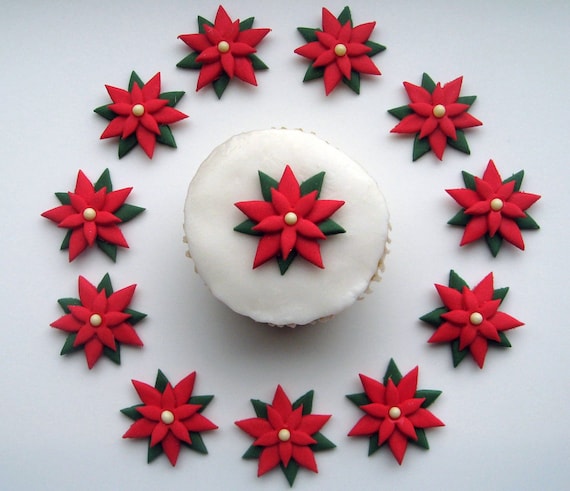
12 Poinsettia PreMade Ready To Use Edible Cupcake Sugar Decorations
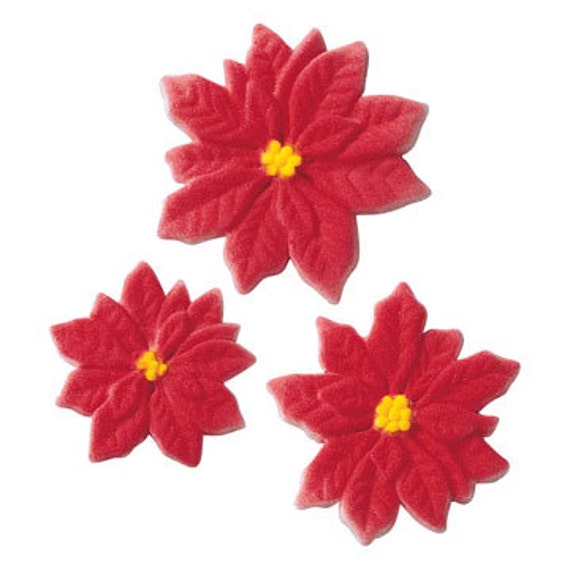
Poinsettia Spray Edible Image Cake Decoration at Birthday Direct

Edible Poinsettia Box by Enjou Chocolat Chocolate.org

Poinsettia Cake HowTo, Make A Poinsettia Cake Covered In Edible

Edible Sugar Icing Christmas Poinsettia Cake by ElegantEdibleIcing

The poinsettia (/p??n's?ti?/ or /p??n's?t?/) (Euphorbia pulcherrima) is a commercially important place varieties of the diverse spurge family. The types is indigenous to Mexico. It is especially popular because of its inexperienced and red foliage which is trusted in Holiday floral shows. It derives its common English name from Joel Roberts Poinsett,[3] the first United States Minister to Mexico,[4] who introduced the plant to the united states in 1825.
Euphorbia pulcherrima is a shrub or small tree, typically achieving a height of 0.6-4 metres (2 ft 0 in-13 ft 1 in). The seed bears dark green dentate leaves that strategy 7-16 centimetres (2.8-6.3 in) long. The colored bracts--which are most flaming red but can be orange often, pale green, cream, red, white, or marbled--are often recognised incorrectly as flower petals for their groupings and colors, but are actually leaves.[citation needed] The colors of the bracts are manufactured through photoperiodism, and therefore they might need darkness (12 hours at a time for at least five days in a row) to change color. At the same time, the plant life require numerous light during the day for the brightest color. The flowers of the poinsettia are unassuming and don't attract pollinators. They are grouped within small yellow structures found in the center of each leaf number, and are called cyathia. The poinsettia is indigenous to Mexico. It is found in the untamed in deciduous tropical forests at moderate elevations from southern Sinaloa down the complete Pacific coast of Mexico to Chiapas and Guatemala. It is also found in the interior in the hot, dried forests of Guerrero seasonally, Oaxaca, and Chiapas. Records of E. pulcherrima growing in the open in Costa and Nicaragua Rica have yet to be proved by botanists. You can find over 100 cultivated types of poinsettia.
The Aztecs used the plant to produce red dye and as an antipyretic medication. In Nahuatl, the language of the Aztecs, the plant is named Cuitlaxochitl, meaning "flower that grows in residues or soil" Today it is well known in Mexico and Guatemala as Flor de Noche Buena, meaning Christmas Eve Flower. In Spain it is known as Flor de Pascua or Pascua, signifying Easter flower. In Peru and Chile, the vegetable became known as Crown of the Andes. In Turkey, it is called Atat?rk's blossom because Atat?rk, the founder of the Republic, liked this bloom and made a substantial contribution to its cultivation in Turkey.[citation needed] In Hungarian, it is named Santa Claus' Blossom, and it's trusted as a Christmas decoration.
The plant's association with Christmas started out in 16th-century Mexico, where tale tells of a girl, commonly called Pepita or Maria, who was simply too poor to give a surprise for the special event of Jesus' birthday and was influenced by an angel to assemble weeds from the roadside and place them before the cathedral altar. Crimson blossoms sprouted from the weeds and became beautiful poinsettias. From the 17th century, Franciscan friars in Mexico included the vegetation in their Christmas get-togethers. The star-shaped leaf routine is said to symbolize the Star of Bethlehem, and the red colorization represents the bloodstream sacrifice through the crucifixion of Jesus. Poinsettias are popular Christmas adornments in homes, churches, offices, and across THE UNITED STATES in other places. They can be purchased in large numbers from grocery, drug, and hardware stores. In america, 12 is National Poinsettia Day dec.
Kirkland Signature 32Inch Decorated Wreath Costco 1

My Costco Holiday Gift Guide 2014 OMG Lifestyle Blog

50 Poinsettias with Free Shipping to Store! Coupon Connections

Poinsettia 10Inch Succulent Garden Ironite Fertilizer

of pine cones, poinsettias, greenery and ornaments. There are 2 colors

The poinsettia (/p??n's?ti?/ or /p??n's?t?/) (Euphorbia pulcherrima) is a commercially important flower types of the diverse spurge family. The types is indigenous to Mexico. It really is particularly popular because of its renewable and red foliage and is also trusted in Christmas floral shows. It derives its common English name from Joel Roberts Poinsett,[3] the first United States Minister to Mexico,[4] who introduced the plant to the US in 1825.
Euphorbia pulcherrima is a shrub or small tree, achieving a level of 0 typically.6-4 metres (2 ft 0 in-13 ft 1 in). The flower bears dark green dentate leaves that measure 7-16 centimetres (2.8-6.3 in) long. The coloured bracts--which are most often flaming red but can be orange, pale green, cream, green, white, or marbled--are often mistaken for blossom petals for their groupings and colors, but are actually leaves.[citation needed] The colors of the bracts are manufactured through photoperiodism, meaning that they might need darkness (12 hours at the same time for at least five days in a row) to improve color. At the same time, the vegetation require numerous light during the day for the brightest color. The flowers of the poinsettia are unassuming , nor attract pollinators. These are grouped within small yellow structures found in the center of every leaf bunch, and are called cyathia. The poinsettia is local to Mexico. It is within the wild in deciduous exotic forests at average elevations from southern Sinaloa down the entire Pacific coast of Mexico to Chiapas and Guatemala. It is found in the inside in the hot also, dry forests of Guerrero seasonally, Oaxaca, and Chiapas. Reports of E. pulcherrima growing in the open in Nicaragua and Costa Rica have yet to be verified by botanists. A couple of over 100 cultivated varieties of poinsettia.
The Aztecs used the plant to produce red dye and as an antipyretic medication. In Nahuatl, the language of the Aztecs, the plant is named Cuitlaxochitl, meaning "flower that grows in residues or soil" Today it is well known in Mexico and Guatemala as Flor de Noche Buena, meaning Christmas Eve Flower. In Spain it is known as Flor de Pascua or Pascua, signifying Easter flower. In Chile and Peru, the vegetable became known as Crown of the Andes. In Turkey, it is called Atat?rk's bloom because Atat?rk, the founder of the Republic, liked this bloom and made a substantial contribution to its cultivation in Turkey.[citation needed] In Hungarian, it is named Santa Claus' Blossom, and it's widely used as a Holiday decoration.
The plant's association with Christmas started in 16th-century Mexico, where story tells of a woman, commonly called Pepita or Maria, who was too poor to provide a gift for the special event of Jesus' birthday and was inspired by an angel to gather weeds from the roadside and place them in front of the chapel altar. Crimson blossoms sprouted from the weeds and became beautiful poinsettias. From the 17th century, Franciscan friars in Mexico included the plants in their Holiday activities. The star-shaped leaf design is said to symbolize the Legend of Bethlehem, and the red colorization represents the blood vessels sacrifice through the crucifixion of Jesus. Poinsettias are popular Holiday decor in homes, churches, office buildings, and across North America in other places. They are available in good sized quantities from grocery, drug, and hardware stores. In america, 12 is Country wide Poinsettia Day december.
Ver la imagen en su resolución original 2700 × 1772 píxeles

Calendario de Niños editable y en español. Calendarios en español

Poinsettia Photo Gallery Paul Ecke Poinsettias

Solicita más información sobre este producto

Classroom en Pinterest Poinsettia, Español y Hojas de cálculo

The poinsettia (/p??n's?ti?/ or /p??n's?t?/) (Euphorbia pulcherrima) is a commercially important place types of the diverse spurge family. The types is indigenous to Mexico. It is particularly popular because of its green and red foliage and is also widely used in Christmas floral displays. It derives its common English name from Joel Roberts Poinsett,[3] the first USA Minister to Mexico,[4] who introduced the plant to the US in 1825.
Euphorbia pulcherrima is a shrub or small tree, typically attaining a elevation of 0.6-4 metres (2 ft 0 in-13 ft 1 in). The seed bears dark green dentate leaves that solution 7-16 centimetres (2.8-6.3 in) long. The colored bracts--which 're normally flaming red but can be orange, pale green, cream, red, white, or marbled--are mistaken for bloom petals for their groupings and colors often, but are actually leaves.[citation needed] The colors of the bracts are created through photoperiodism, and therefore they might need darkness (12 hours at the same time for at least five days in a row) to improve color. At the same time, the vegetation require abundant light during the full day for the brightest color. The flowers of the poinsettia are unassuming and do not attract pollinators. They are really grouped within small yellowish structures within the center of each leaf number, and are called cyathia. The poinsettia is native to Mexico. It is found in the outdoors in deciduous tropical forests at modest elevations from southern Sinaloa down the whole Pacific coast of Mexico to Chiapas and Guatemala. It really is found in the interior in the hot also, seasonally dried up forests of Guerrero, Oaxaca, and Chiapas. Studies of E. pulcherrima growing in the open in Nicaragua and Costa Rica have yet to be verified by botanists. A couple of over 100 cultivated types of poinsettia.
The Aztecs used the plant to produce red dye and as an antipyretic medication. In Nahuatl, the language of the Aztecs, the plant is called Cuitlaxochitl, meaning "flower that grows in residues or soil" Today it is known in Mexico and Guatemala as Flor de Noche Buena, meaning Christmas Eve Flower. In Spain it is known as Flor de Pascua or Pascua, meaning Easter flower. In Chile and Peru, the seed became known as Crown of the Andes. In Turkey, it is called Atat?rk's bloom because Atat?rk, the founder of the Republic, liked this rose and made a substantial contribution to its cultivation in Turkey.[citation needed] In Hungarian, it is named Santa Claus' Bloom, and it's trusted as a Holiday decoration.
The plant's connection with Christmas started in 16th-century Mexico, where story tells of a woman, called Pepita or Maria commonly, who was simply too poor to provide a gift idea for the special event of Jesus' birthday and was encouraged by an angel to gather weeds from the roadside and place them in front of the cathedral altar. Crimson blossoms sprouted from the weeds and became beautiful poinsettias. From the 17th century, Franciscan friars in Mexico included the vegetation in their Christmas festivities. The star-shaped leaf pattern is said to symbolize the Star of Bethlehem, and the red colorization represents the blood sacrifice through the crucifixion of Jesus. Poinsettias are popular Holiday decor in homes, churches, office buildings, and elsewhere across North America. They can be purchased in large numbers from grocery, drug, and hardware stores. In the United States, 12 is Country wide Poinsettia Day december.
dangerous plant christmas tree preservatives are usually not toxic

1000+ images about Christmas crap on Pinterest Christmas humor

not. Poinsettias have an awfully bitter taste… Flickr.com/ejorpin

+Poisonous+Cats Are Poinsettias Poisonous For Dogs and Cats animal

Poinsettia poisonous watch out for children and pets

The poinsettia (/p??n's?ti?/ or /p??n's?t?/) (Euphorbia pulcherrima) is a commercially important seed species of the diverse spurge family. The varieties is indigenous to Mexico. It really is specifically popular because of its red and inexperienced foliage and it is widely used in Xmas floral displays. It derives its common English name from Joel Roberts Poinsett,[3] the first USA Minister to Mexico,[4] who introduced the plant to the US in 1825.
Euphorbia pulcherrima is a shrub or small tree, reaching a elevation of 0 typically.6-4 metres (2 ft 0 in-13 ft 1 in). The flower bears dark inexperienced dentate leaves that solution 7-16 centimetres (2.8-6.3 in) in length. The shaded bracts--which are most flaming red but can be orange often, pale green, cream, pink, white, or marbled--are recognised incorrectly as bloom petals because of their groupings and colors often, but are actually leaves.[citation needed] The colors of the bracts are manufactured through photoperiodism, and therefore they might need darkness (12 hours at the same time for at least five days in a row) to improve color. At the same time, the plant life require abundant light through the full day for the brightest color. The flowers of the poinsettia are unassuming and do not attract pollinators. They are grouped within small yellow structures found in the center of each leaf number, and are called cyathia. The poinsettia is indigenous to Mexico. It really is within the outrageous in deciduous tropical forests at average elevations from southern Sinaloa down the whole Pacific coast of Mexico to Chiapas and Guatemala. Additionally it is found in the inside in the hot, dried forests of Guerrero seasonally, Oaxaca, and Chiapas. Reports of E. pulcherrima growing in the open in Nicaragua and Costa Rica have yet to be verified by botanists. A couple of over 100 cultivated types of poinsettia.
The Aztecs used the plant to produce red dye and as an antipyretic medication. In Nahuatl, the language of the Aztecs, the plant is called Cuitlaxochitl, meaning "flower that grows in residues or soil" Today it is known in Mexico and Guatemala as Flor de Noche Buena, meaning Christmas Eve Flower. In Spain it is known as Flor de Pascua or Pascua, indicating Easter flower. In Chile and Peru, the flower became known as Crown of the Andes. In Turkey, it is named Atat?rk's bloom because Atat?rk, the creator of the Republic, liked this rose and made a substantial contribution to its cultivation in Turkey.[citation needed] In Hungarian, it is named Santa Claus' Flower, and it's trusted as a Holiday decoration.
The plant's connection with Christmas started out in 16th-century Mexico, where tale tells of a woman, called Pepita or Maria commonly, who was simply too poor to provide a present for the celebration of Jesus' birthday and was inspired by an angel to assemble weeds from the roadside and place them in front of the cathedral altar. Crimson blossoms sprouted from the weeds and became beautiful poinsettias. From the 17th century, Franciscan friars in Mexico included the vegetation in their Christmas get-togethers. The star-shaped leaf pattern is said to symbolize the Star of Bethlehem, and the red color represents the blood vessels sacrifice through the crucifixion of Jesus. Poinsettias are popular Holiday designs in homes, churches, offices, and elsewhere across North America. They can be purchased in good sized quantities from grocery, drug, and hardware stores. In america, 12 is Country wide Poinsettia Day dec.
Are Poinsettias poisonous to cats? NO! MetroEast Home Vet Care

Are Poinsettias Poisonous to Dogs and Cats Houseplant 411 How to

Holiday Plants that are Toxic for Your Pet Save One Soul Animal

1000+ images about Poison Prevention Awareness on Pinterest Poisons


